GRP Roof RRepair Guide: How to Repair a Fibreglass Roof

Fibreglass Roof Repair Kit

A roof repair is one activity that should always be approached with careful preparation and the right knowledge. With various flat roofing systems available—each using different materials and repair methods—it’s essential to first identify your roofing type before beginning any work.

This GRP Roof Repair Guide will walk you through how to repair a fibreglass roof (also known as GRP roofing), providing a clear, step-by-step approach for achieving a long-lasting, professional finish.

Understanding Different Flat Roofing Systems

Before starting any repair, confirm the roofing system you are working with:

  • Concrete Roofing – A solid concrete slab used as a structural roof surface
  • Asphalt Roofing – Bitumen-based with a grey, stone-like finish
  • Felt Roofing – Traditional layered bitumen system with a gritty texture
  • EPDM Roofing – A synthetic rubber membrane
  • Fibreglass / GRP Roofing – A seamless liquid system using matting, resin, and topcoat

This guide specifically focuses on how to repair a fibreglass roof, ensuring you follow the correct GRP repair process.

Step 1: Identify Damage and Materials Needed

The first step in any GRP roof repair guide is assessing the damage. Common fibreglass roof issues include:

  • Cracks or tears
  • Holes or punctures
  • Crushed laminate
  • Delamination

To detect hidden damage, gently tap the roof surface with a coin—changes in sound can reveal weakened areas.

Important Tip

Always match the repair material to the original roof system:

  • Use epoxy resin if the original roof was epoxy-based
  • Use polyester resin if the original roof was polyester-based

Accurate material matching ensures a strong secondary bond.

Step 2: Prepare and Fill the Repair Area

Once the damaged area is identified:

  1. Clean and prepare the surface
  2. Mix resin and catalyst until it reaches a thick, mayonnaise-like consistency
  3. Apply the mixture to the damaged area, slightly overfilling
  4. Allow it to cure completely

For deeper damage, add milled fibres to strengthen the filler.

After curing, sand the repair area until smooth and level with the surrounding surface.

Step 3: Laminating the Fibreglass Roof

A key part of understanding how to repair a fibreglass roof is proper lamination.

Process:

  1. Cut fibreglass matting into two layers:
    • One slightly smaller than the repair area
    • One slightly larger (approx. 20mm overlap)
  2. Mix polyester resin with 2% catalyst
  3. Apply resin to the repair surface
  4. Lay the first mat layer and saturate with resin
  5. Apply the second layer and repeat

Use a paddle roller to remove air bubbles and ensure full adhesion.

Allow the laminate to cure before sanding it smooth.

Step 4: Sanding and Cleaning

Once cured:

  • Sand the repaired area until fully blended
  • Clean using acetone to remove dust and residue

A smooth, clean surface is essential for a professional finish.

Step 5: Apply the Final Topcoat

The final stage in this GRP Roof Repair Guide is sealing the repair with a topcoat:

  • Mix topcoat with 2% catalyst
  • Apply evenly using a roller or brush
  • Recommended coverage: 500g per m²

This step ensures a fully waterproof, UV-resistant, and seamless finish.

Where to Buy Fibreglass Roof Repair Materials

For reliable results when learning how to repair a fibreglass roof, using high-quality materials is essential.

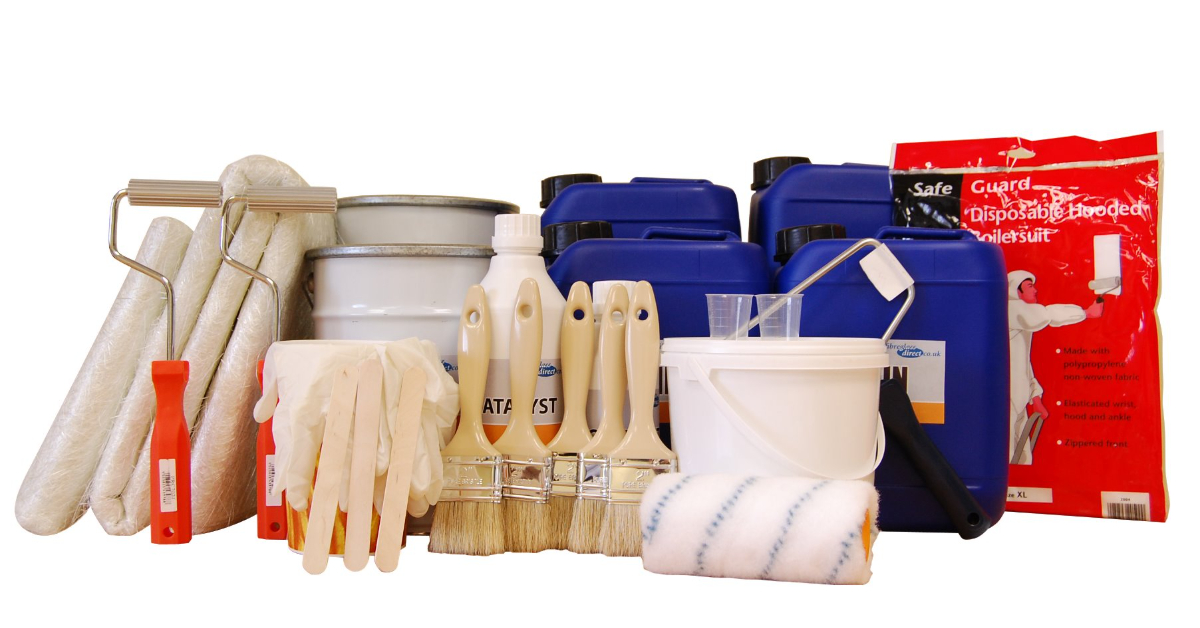
Professional GRP repair kits typically include:

  • Fibreglass matting
  • Lloyd’s approved resin
  • Topcoat
  • Application tools

TriRoof offers a comprehensive range of fibreglass/GRP roof repair kits, designed for both professionals and DIY users.

Final Thoughts

Repairing a GRP roof doesn’t have to be complicated when you follow a structured approach. This GRP Roof Repair Guide provides everything you need to confidently understand how to repair a fibreglass roof, from identifying damage through to applying the final topcoat.

For best results:

  • Always prepare thoroughly
  • Use the correct materials
  • Follow each stage carefully

If you need further support, expert advice, or product recommendations, don’t hesitate to contact our team.

TRIROOF ARTICLES

Liquid Roofing Systems Banner
Construction & Building Solutions
Roofing Resin Subcategories Explained

Roofing resins like Original GRP, HPX, MultiFlex, Polyurethane, and Acrylic offer unique benefits for residential and commercial properties. Learn about the advantages, applications, and features of each resin type to choose the best option for your roofing needs.

Read More »