
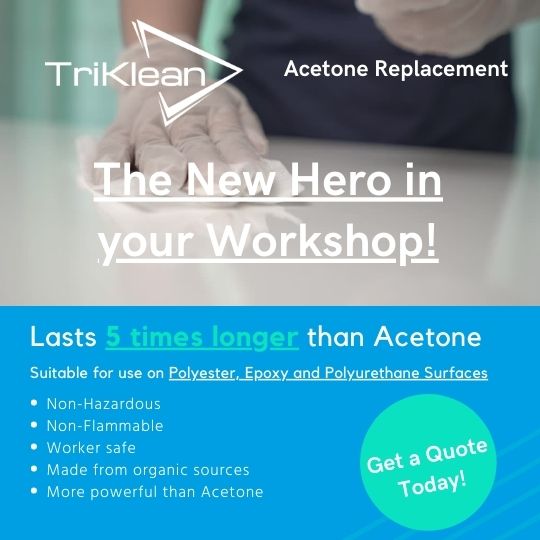
ACETONE REPLACEMENT

acetone replacement

Why Replace Acetone? A Safer, Smarter Alternative for Composite Cleaning

Acetone has long been used as a solvent cleaner in composite manufacturing, valued for its ability to remove uncured resin, degrease surfaces, and clean tools. It’s also found in everyday products such as nail polish remover and fuel additives.

However, while acetone is effective, it comes with serious safety, health, environmental, and cost drawbacks—particularly in busy composite workshops.

For manufacturers looking to improve workplace safety, reduce solvent consumption, and lower operating costs, replacing acetone with a safer alternative is now a practical and proven option.

The Hidden rISKS of Using Acetone in Composite Workshops

Extreme Flammability

Acetone is highly flammable, with a very low flashpoint. Even small quantities can ignite quickly, creating a constant fire risk when used near:

  • Power tools and machinery
  • Sparks and static
  • Heat sources and curing equipment

This makes acetone particularly hazardous in composite production environments.

Worker Health Concerns

Regular or prolonged exposure to acetone can negatively impact worker health, including:

  • Irritation to eyes, nose, and throat
  • Dry, cracked, or damaged skin
  • Headaches and dizziness caused by strong fumes
  • Increased reliance on ventilation and fume extraction systems

These factors make acetone less compatible with modern, safety‑focused manufacturing facilities.

Rising Usage Costs

Acetone evaporates extremely quickly. As a result:

  • Large volumes are used during routine cleaning
  • Waste levels increase
  • Replacement frequency is high

With ongoing increases in global solvent prices, continued acetone use leads to higher operational costs and avoidable waste.

Meet TriKlean: A sAFER aLTERNATIVE TO aCETONE

TriKlean, developed by Tricel Composites, is a non‑hazardous solvent cleaner engineered specifically to replace acetone in composite manufacturing, maintenance, and tooling environments.

It delivers powerful cleaning performance without the safety and handling risks associated with traditional solvents.

TriKlean Acetone Replacement: Key Benefits

TriKlean Acetone Replacement

Non‑Flammable

Eliminates fire risk, making it ideal for workshops, production floors, and enclosed spaces.

Safer for Workers
Low‑toxicity formulation with no harsh chemical fumes—protecting skin and respiratory health.

Eco‑Friendly Formula
Manufactured using biodegradable, organic components to support environmentally responsible production.

More Cost‑Effective
TriKlean lasts up to five times longer than acetone, reducing solvent usage, disposal costs, and reordering frequency.

Highly Versatile
Suitable for cleaning tools and surfaces used with:

  • Polyester resins
  • Epoxy systems
  • Polyurethane materials


With up to 10× the cleaning power of acetone, TriKlean helps teams work cleaner, safer, and more efficiently.

ARRANGE A TRIAL & DOWNLOAD TDS

FAQ: aCETONE rEPLACEMENTS & tRIkLEAN

wHY sHOULD i REPLACE ACETONE IN MY WORKSHOP?

Acetone is extremely flammable, produces harmful fumes, and evaporates quickly—leading to higher consumption, increased risk, and rising operational costs.

What makes TriKlean safer than acetone?

TriKlean is non‑flammable, low‑toxicity, and free from harsh chemical fumes, making it safer for workers and indoor environments.

Can TriKlean clean both epoxy and polyester resin tools?

Yes. TriKlean effectively cleans tools and surfaces used with polyester, epoxy, and polyurethane resin systems.

Will TriKlean reduce cleaning costs?

Absolutely. TriKlean lasts up to five times longer, reducing solvent consumption and disposal costs.

Is TriKlean environmentally friendly?

Yes. It is made using biodegradable, organic ingredients, making it a greener alternative to traditional solvents.