Liquid Roofing vs Traditional Flat Roof Replacement: Cost, Downtime and Lifecycle Comparison

Flat Roof Crack

When a flat roof reaches the end of its serviceable life, the default assumption is often full replacement. However, for refurbishment projects, replacement isn’t always the most practical or cost‑effective choice.

Liquid‑applied roofing systems are increasingly specified as an alternative. But how do they really compare when measured against traditional strip‑and‑replace approaches?

Installation Time and Programme Certainty

Traditional replacement

  • Requires removal of existing membrane
  • Leaves roof exposed during works
  • Highly weather dependent
  • Longer overall programme


Liquid‑applied overlays

  • Applied directly onto prepared substrates
  • Seamless and fully bonded
  • Designed to be installed more quickly
  • Reduced exposure time

Shorter installation windows are especially valuable on live sites where disruption must be minimised.

Disruption to Occupants

Roof replacement can introduce:

  • Noise from mechanical strip‑out
  • Dust and debris risks
  • Odours from hot works or adhesives
  • Restricted building access

Liquid‑applied systems are typically cold‑applied and quieter to install, making them better suited to sensitive environments such as:

  • Hospitals
  • Schools and universities
  • Manufacturing facilities
  • Retail and logistics hubs

Whole‑Life Cost vs Upfront Cost

While replacement may appear attractive from a long-term perspective, it often comes with:

  • Higher upfront capital expenditure
  • Temporary weatherproofing costs
  • Business interruption losses

Liquid roofing overlays deliver strong value through:

  • Lower initial cost
  • Reduced labour and waste disposal
  • Extended roof life without structural alteration

When assessed on a whole‑life cost basis, overlays frequently outperform replacement — particularly where the existing substrate remains structurally sound.

Sustainability and Environmental Impact

Roof replacement generates substantial waste and embodied carbon through disposal and new material manufacture.

Liquid‑applied overlays:

  • Extend the life of existing roofs
  • Minimise landfill waste
  • Reduce transport and resource use
  • Support environmental and ESG objectives

For organisations with sustainability targets, this can be a deciding factor.

Performance and Durability Considerations

Modern liquid systems are engineered for:

  • Long‑term flexibility
  • Crack bridging over moving substrates
  • Seamless waterproofing
  • Resistance to UV and standing water

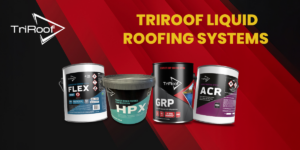
High‑performance solutions such as TriRoof HPX are designed to outperform traditional materials, particularly in refurbishment scenarios where movement and detail complexity are key risks.

Making the Right Choice

Traditional roof replacement still has its place, particularly where structural failures exist. However, for many refurbishment projects, liquid‑applied overlays offer a smarter, lower‑risk approach with measurable performance advantages.

Read More...